Skip to content
Giallo

AI in logistics: agents that clear the dispatch desk.

What can AI do for a logistics company?

AI in logistics works on the paperwork around every trip: pickup orders received by email, questions about where the goods are, held shipments to release, signed delivery notes to check. In Giallo Studio projects, GPT transcribes orders into the TMS, Claude answers customers and Gemini reads photographed delivery notes; loads and routes stay with dispatch.

We write for freight forwarders, trucking companies and third-party logistics providers who want to see, agent by agent, what we build: which event sets it in motion, which programs it touches, which model it uses and where it stops to wait for a person. Fleet planning stays yours: we take away the copying and answering work that clogs phones and inboxes.

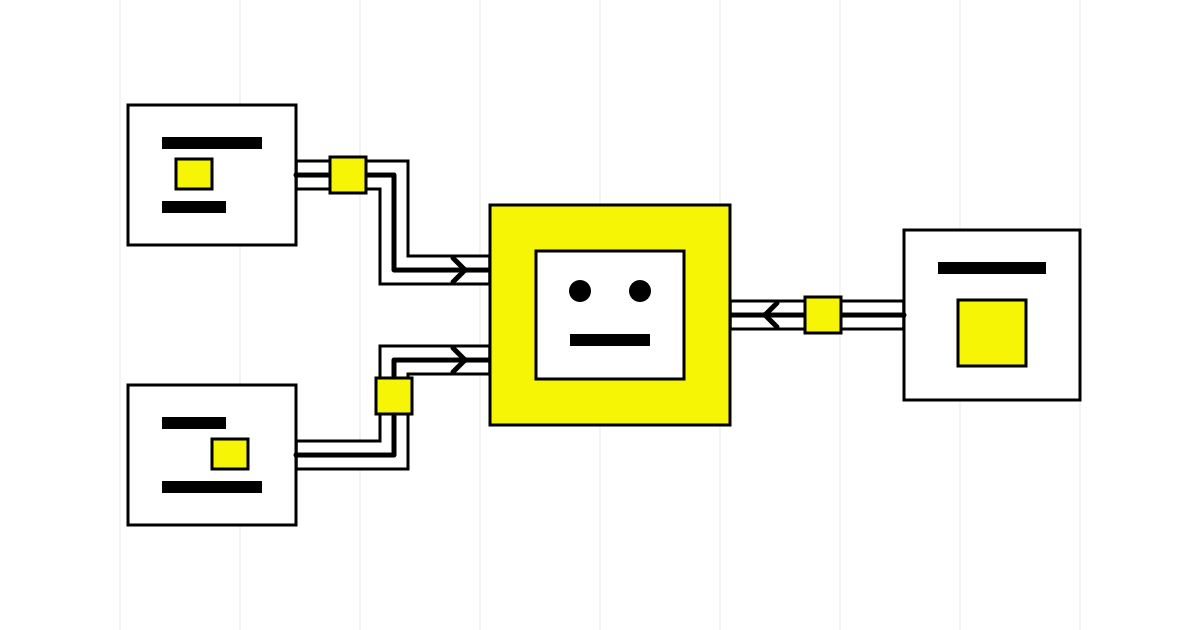
AI in logistics: yellow parcels move along white tracks from three depots toward a central hub that coordinates the flows

The AI agents we design, one by one.

Pickup order agent

Turns customers' emails, PDFs and spreadsheets into draft orders in the TMS, ready for confirmation.

When a customer sends a pickup or shipping request to the dispatch office inbox.

  • Dispatch email inbox
  • Company TMS
  • Customer master data
  • Custom connector
GPT
It returns an order in structured, field-by-field format even from messy documents, and the connector rejects anything that doesn't match the schema before writing to the TMS.
Codex
It writes and updates the connector to the TMS and the address validation rules; it works on the code, not on customer orders.
How it works, step by step
  1. Recognizes emails containing a transport request and separates them from reminders, offers and administrative messages.
  2. Extracts shipper, recipient, loading and unloading windows, packages, weights, volumes and notes such as tail lift or fragile goods.
  3. Checks the customer's master data in the TMS and suggests the loading point already on file instead of creating a new one.
  4. Creates the draft order and highlights uncertain fields with the original sentence they came from.
  5. After the operator confirms, it sends the customer the order acknowledgment with the internal reference.

Who approves. No order becomes final without the operator's click. Requests involving dangerous goods or temperature-controlled freight always get a full review, even if the draft looks perfect.

Shipment status agent

Replies with the latest available tracking event and hands off to a person only the shipments with an anomaly.

Every time a customer asks about a shipment, by email, website chat or customer portal.

  • Carrier tracking
  • Company TMS
  • Website chat
  • Customer Area
Claude Haiku
The questions are many, short and alike: you need a fast, low-cost model that understands the reference even when the customer writes in a hurry.
Claude Sonnet
It steps in only when the message is a complaint or concerns a delay already known, because it keeps a measured tone and respects the rule against promising dates the carrier hasn't confirmed.
How it works, step by step
  1. Finds the useful reference in the message: shipment number, customer order number or recipient name.
  2. Queries the TMS and the assigned carrier's tracking and reconstructs the sequence of events.
  3. If the shipment is on track, it replies with the status, the latest scan and the expected date given by the carrier.
  4. If it finds an exception, an unusual delay or a contradictory event, it doesn't improvise: it opens a ticket for customer service with the timeline ready.

Who approves. The customer service manager approves the template replies and the list of cases that always go to a person: damage, shortages, disputes and compensation claims.

Held shipments and exceptions agent

Collects the shipper's instructions to release the held shipment and prepares the release notice for the carrier.

As soon as the carrier reports a failed delivery, a refusal or a hold at the depot.

  • Carrier notifications
  • Company TMS
  • Shipper's email
  • Carrier portal
Claude Sonnet
It writes to the shipper precisely and courteously and follows long rules on the options allowed for each carrier, without inventing new ones.
How it works, step by step
  1. Recognizes the hold notice among the carrier's notifications and links it to the shipment in the TMS.
  2. Writes the shipper a clear request with the reason for the hold and the available options: redelivery, address change, return or pickup at the depot.
  3. Interprets the shipper's reply and prepares the release instruction in the format the carrier requires.
  4. Queues the instruction for the operator and, if the shipper doesn't reply, flags the follow-up within the time frames set by your contract.

Who approves. Release instructions go out only after the operator confirms; storage charges to bill the customer are decided by the accounts department.

Proof of delivery agent

Checks proof of delivery, separates clean deliveries from those with reservations and prepares the list for invoicing.

When drivers upload photos of signed delivery notes, and every evening before invoicing closes.

  • Drivers' app
  • Document archive
  • Company TMS
  • Invoicing module
Gemini
It reads images and scans of varying quality well, including handwritten reservations, and handles end-of-day volumes.
GPT
We use it during testing as a second reader on the same documents: where the two models disagree, the delivery note goes to a person anyway.
How it works, step by step
  1. Collects images of delivery notes and consignment notes from the drivers' app or the dedicated inbox.
  2. Matches each image to its shipment by reading the document number, recipient and date on the delivery note.
  3. Checks for a signature and stamp and transcribes the reservations handwritten by the recipient, such as missing packages or damaged packaging.
  4. Marks clean deliveries as ready for invoicing and puts the others on a list to clarify, with the image attached.

Who approves. The agent never closes a delivery with reservations: handling the dispute and opening any claim stay with the claims office.

Before and after the agent, in everyday work.

Pickup orders arrive in a thousand formats

Today. One customer sends a PDF generated by their management software, another writes everything in the body of the email, a third attaches a spreadsheet with packages and weights in columns that are always different. An operator retypes addresses, loading windows and notes into the TMS, and every typo becomes a wasted trip.

With the agent. The agent reads each request, fills in a draft order in the TMS with the fields already in place and flags in yellow anything missing or inconsistent, like a postal code that doesn't match or an out-of-range weight. The operator checks and confirms instead of retyping.

The phone rings with people asking where their goods are

Today. Many calls and emails to customer service ask the same thing: has it shipped, when will it arrive, who signed for it. To answer, someone opens the carrier's portal, looks up the shipment number and calls back, while the other messages wait.

With the agent. Status requests are handled by an agent that queries the carriers' tracking and the TMS and replies with the latest recorded event. Customer service only gets the cases with a real problem, already summarized.

A held shipment discovered late costs twice

Today. Recipient not home, incomplete address, delivery refused: the carrier's notice stays buried among dozens of automatic notifications. By the time someone notices, the goods have been sitting for days and the shipper is already calling, angry.

With the agent. Every failed-delivery notice is recognized as soon as it arrives, linked to the shipment and turned into a request for instructions to the shipper with the options the contract allows. The reply goes back to the carrier only after the operator gives the go-ahead.

Proof of delivery holds up invoicing

Today. Signed delivery notes and consignment notes arrive as crooked photos from the driver's phone or as unreadable scans. Before invoicing, someone has to check signatures, stamps and noted reservations, and the check often slips to the end of the month.

With the agent. An agent reads the images, recognizes whether the delivery is clean or accepted with reservations and prepares the list of shipments ready to invoice and those to clarify, with the image alongside.

Frequently asked questions, straight answers.

That's not the job of the agents we build. There's dedicated planning software for calculating routes and filling vehicles; our agents work on the orders, messages and documents around the trip and leave load decisions to dispatch.

Start with a document flow that repeats every day, such as pickup orders or proof of delivery. In a small business, AI for the supply chain pays off most when it connects people and programs you already have, before any demand forecasting.

Usually not. We check what your TMS exposes through an API or exports, if the software offers them, and write a connector that works in draft; if access is too closed, the agent prepares the data in a format the TMS can import.

Mostly yes, if the image is legible. When the handwriting or the photo leaves doubts, the agent doesn't guess: it flags the document for verification and passes it to a person with the image alongside.

An operator always confirms the order, so responsibility stays within your procedure, as it does today. The agent helps by highlighting uncertain fields and showing which sentence from the customer they came from.

No. We use paid versions of the models, which do not use shipment data for training.

How we work with you.

  1. A week of dispatch email

    We start from a sample of real emails, orders and notices, anonymized, to get a rough count of which requests repeat and which formats your most active customers send.

  2. A map of carriers and their notices

    For each carrier we note how it communicates tracking and held shipments, whether it offers an API or only email and a portal, and which release options it allows.

  3. Boundary rules with dispatch

    Together with the transport manager we write down what the agent fills in on its own, what it leaves as a draft and which goods or customers always go through a person.

  4. Testing on completed trips

    We run the agent on finished shipments whose outcome we know, compare the models and fix the instructions before touching real orders.

Send us three dispatch emails

Send us an example of the messages you get every day, orders, reminders or held-shipment notices: from there we'll figure out which repetitive message to have the agent read and how to connect it to the TMS you already use.

Prefer the full form? Go to the contact page.

No spam or sales pitches. Response within 1 business day.

We use this data to contact you and, if we work together, to manage the project. We store it in Giallo's internal management system, on servers in the European Union, where only our team can see it; by email we only receive a notice, without your data. If you do not become a client, we delete it 3 months after our last contact. Details and your rights: privacy policy.

Do you prefer to write or call us?

AI agents for logistics and transportation

Which pile of email do you want to take off the dispatch office's desk?

Send us an example of the messages you get every day, orders, reminders or held-shipment notices: from there we'll figure out which repetitive message to have the agent read and how to connect it to the TMS you already use.