Skip to content
Giallo

Artificial intelligence for dental practices: agents that take the load off the front desk.

What is artificial intelligence used for in a dental practice?

Artificial intelligence for dental practices is useful above all away from the chair: AI agents that handle hygiene recalls, patient messages, treatment plan summaries and lab work. Giallo Studio builds them to measure with Claude, GPT and Gemini, connected to the practice-management software, and leaves every clinical decision to the dentist.

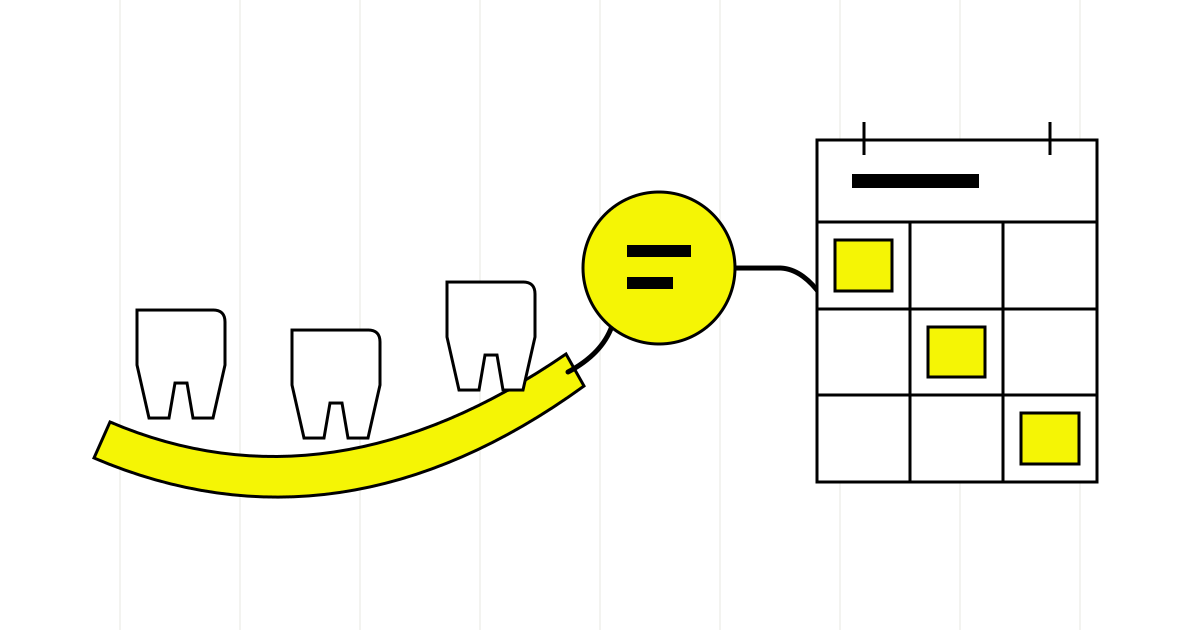
Three stylized teeth glide along a curved belt toward a yellow agent that organizes appointments in a grid calendar

This page is for owners and managers of dental practices who want to know which AI agents we build, which tools they talk to, which model we choose for each task and where the clinician's judgment remains mandatory. No automated diagnoses: we work on the time the front desk loses between phone, schedule and messages.

Where time gets lost today.

These are the points we hear about most often. Each one is a possible first agent.

The phone rings while the assistant is chairside

The same person hands over instruments, prepares the operatory and answers whoever wants to move their appointment. Missed calls turn into callbacks for the end of the day, when the practice is already closed.

Simple requests come in writing to an agent that knows the schedule: confirmations, moves between open slots, directions to the practice. Anything that needs a person lands in a tidy queue with the context already written.

Hygiene recalls pile up

Every week someone scrolls through the list of patients due, sends messages one by one and notes who replied. Those who don't reply slip to the bottom and resurface months later.

The agent reads from the practice-management software the interval the dentist set for each patient, proposes times on the hygienist's days, interprets the replies and prepares the short list of people to call back by phone.

The quote stays on the kitchen table

The treatment plan is explained in the chair, then the patient goes home with a sheet crammed with technical items. They don't say no; they simply don't call back, and nobody has time to follow up.

An agent prepares a plain-language summary that the dentist rereads and signs, answers practical questions about sessions and payments already agreed, and gently reminds the patient that the practice is happy to talk it over again.

Lab work out of sync with the schedule

Crowns, night guards and dentures come back from the lab with emails and delivery notes that nobody links right away to the patient's record. The try-in is booked before the work has arrived, or the work waits in a drawer.

The agent reads the lab's messages, matches the order number to the patient, updates the status and proposes the try-in appointment only when the assistant confirms the work is at the practice.

The AI agents we design, one by one.

A dental practice's agents at work: the teeth of the arch are the patients due for recall and change color when the appointment is booked; meanwhile a symptom written in the chat goes to the front desk, the simplified treatment plan waits for the dentist's signature and the crown from the lab returns to its place.

Recalls and scheduling agent

It finds patients whose recall is due, proposes times that fit the free chairs and keeps the schedule in line with the replies.

Every morning before opening, and every time a patient replies to a reminder.

  1. It reads from the dental practice-management software the recalls that are due, with the interval the clinician set for that patient.
  2. It cross-checks the hygienist's days with the open slots and picks two options for each patient.
  3. It sends the reminder using a message template already approved by the practice, on the channel the patient chose.
  4. It interprets free-text replies, even when the patient asks for another day or writes vaguely.
  5. It books or moves the appointment in the practice-management software and puts those who didn't reply on a short list for the assistant to call.

Connects to: The practice's dental management software · WhatsApp Business Platform · SMS and email · Google Calendar or the software's calendar

Claude Haiku
Patient replies are short and numerous: it takes a fast, inexpensive model that understands “can't do Thursday, the week after is better” without hesitation.
Gemini Flash
When the practice already works in Google Workspace we test it on the same replies, because it integrates well with calendars and shared sheets.

Who approves. The assistant approves the message templates and rescheduling rules once; cases outside the rules, such as a long session to reschedule, always go to her.

Patient messages agent

It answers practical questions with the information written by the practice and immediately routes anything health-related to a person.

Throughout the day, on the website chat and WhatsApp, even when the practice is closed.

  1. It introduces itself as an automated assistant and says when it's better to call.
  2. It answers about hours, address, parking, documents to bring and insurance agreements, using only the information sheets approved by the practice.
  3. It recognizes words that point to a clinical problem, such as pain, swelling or bleeding, and gives no advice.
  4. It hands the conversation to the front desk with a summary, or gives the emergency number if the practice is closed.

Connects to: Website chat · WhatsApp Business Platform · Practice information sheets · Front desk mailbox

Claude Sonnet
It follows long instructions and refusal rules precisely: it's the model we prefer when the tone has to stay sober and clinical questions must always be passed to a person.
Claude Haiku
It acts as the first filter on incoming messages and sorts out the purely organizational ones, so the more capable model works only where it's needed.

Who approves. The owner approves the list of allowed answers and the list of topics that always go to a person; every change to that list goes through him.

Treatment plans agent

It turns the treatment plan into an understandable summary, answers practical questions and tracks the status of each quote.

After the visit where the dentist hands over the quote, and in the following days if the patient doesn't get in touch.

  1. It reads the treatment plan and quote from the practice-management software, without accessing X-rays or images.
  2. It writes a draft summary by phases and sessions, in the words the patient uses at home.
  3. It queues the draft for the dentist, who corrects it or approves it with one click.
  4. After the period chosen by the practice it sends a single reminder with two options: book the first session or talk it over again at the practice.
  5. It updates the quote status: delivered, pending, accepted or declined.

Connects to: The practice's dental management software · Email · WhatsApp Business Platform · Patient document area

Claude Sonnet
It writes clear, measured Italian and respects the ban on adding promises, discounts or clinical judgments the dentist didn't write.
GPT
We compare it with Claude Sonnet in testing, on the same anonymized treatment plans: the model whose summaries the dentist corrects least stays in production.

Who approves. No summary goes out without the dentist's approval. Treatment alternatives, risks and informed consent remain a conversation at the practice.

Dental lab agent

It links the lab's messages to the patient's record and coordinates the chairside try-in with the actual arrival of the work.

When an email or document arrives from the dental lab, and when the assistant marks a case as returned.

  1. It reads the lab's emails, delivery notes and shipping confirmations and extracts order number, type of work and expected date.
  2. It matches the order to the patient in the practice-management software and updates the status of the work.
  3. If the lab reports a delay, it alerts the front desk and proposes moving the try-in before the patient shows up.
  4. When the assistant confirms arrival, it prepares the message with proposed times for the try-in.

Connects to: Practice email inbox · The practice's dental management software · Lab documents in PDF · Custom connector to the management software

GPT
It extracts structured data from emails and PDFs in ever-changing formats, with field-by-field controlled output that the connector checks before writing.
Codex
It doesn't work on patient data: we use it to write and maintain the connector to the practice-management software, with code reviewed by our team.

Who approves. The “arrived” status is always confirmed by the assistant at the practice: the agent never books a try-in based on a single email from the lab.

Which AI model we use, and for which task.

We don't tie you to a single provider: we work with Claude by Anthropic, GPT and Codex by OpenAI, and Gemini by Google, and we choose the version during testing, on your own cases.

Claude Haiku

  • Recalls and scheduling agent. Patient replies are short and numerous: it takes a fast, inexpensive model that understands “can't do Thursday, the week after is better” without hesitation.
  • Patient messages agent. It acts as the first filter on incoming messages and sorts out the purely organizational ones, so the more capable model works only where it's needed.

Gemini Flash

  • Recalls and scheduling agent. When the practice already works in Google Workspace we test it on the same replies, because it integrates well with calendars and shared sheets.

Claude Sonnet

  • Patient messages agent. It follows long instructions and refusal rules precisely: it's the model we prefer when the tone has to stay sober and clinical questions must always be passed to a person.
  • Treatment plans agent. It writes clear, measured Italian and respects the ban on adding promises, discounts or clinical judgments the dentist didn't write.

GPT

  • Treatment plans agent. We compare it with Claude Sonnet in testing, on the same anonymized treatment plans: the model whose summaries the dentist corrects least stays in production.
  • Dental lab agent. It extracts structured data from emails and PDFs in ever-changing formats, with field-by-field controlled output that the connector checks before writing.

Codex

  • Dental lab agent. It doesn't work on patient data: we use it to write and maintain the connector to the practice-management software, with code reviewed by our team.

How we choose between models: the best AI model for agents.

How we work with you.

  1. A morning at the front desk

    We observe how calls, messages and recalls really come in, and which steps today force people to interrupt chairside work.

  2. Rules written with the dentist

    Together we set what the agent can do on its own, which phrases it never uses and which topics always go to a person.

  3. Connecting to the practice software

    We check what the practice-management software exposes through APIs or exports and build the connector with permissions limited to what's needed.

  4. Testing on real cases, without real patients

    We test the agent on anonymized messages and quotes, compare the models and fix the instructions before opening the channel to patients.

  5. One agent at a time

    We start with the workflow that weighs most on the front desk and add the next one only when the first runs without surprises.

Your practice, your first agent

Tell us how recalls, messages and quotes reach your practice today: we'll tell you which agent to build first and how to connect it to the software you already use.

Prefer the full form? Go to the contact page.

No spam or sales pitches. Response within 1 business day.

We use this data to contact you and, if we work together, to manage the project. We store it in Giallo's internal management system, on servers in the European Union, where only our team can see it; by email we only receive a notice, without your data. If you do not become a client, we delete it 3 months after our last contact. Details and your rights: privacy policy.

Do you prefer to write or call us?

Frequently asked questions, straight answers.

No. A front desk agent recognizes messages that mention pain, swelling or bleeding and passes them right away to a person at the practice, without asking clinical questions and without giving advice. Automated replies cover only organizational information written and approved by the practice.

Usually not. First we check what your current software offers: if it already has recalls and reminders we use them, and the agent handles whatever requires understanding free text. The connection goes through APIs or exports, with limited permissions.

It depends on the task. For patient messages we prefer Claude Sonnet, for sorting short replies Claude Haiku or Gemini Flash, for extracting data from lab documents GPT. The final choice is made in testing, on the same anonymized cases.

No. We use professional versions of the models, which do not train on patient data, and the agents receive only the fields the task needs.

Only for the appointment types the practice has described with duration, chair and clinician. First visits that need tests or different timing remain a proposal the front desk confirms, so the schedule doesn't fill up with bad fits.

It depends on how open the practice-management software is to integrations and how many rules need to be written with the dentist. In the first call we look at exactly these two points and tell you which agent is worth building first.

AI agents for dental practices

Which front desk task do you want to take off first?

Tell us how recalls, messages and quotes reach your practice today: we'll tell you which agent to build first and how to connect it to the software you already use.